
{主关键词}
天梯
搭建对外开放平台 激活服务贸易动能——2026年中国国际服务贸易交易会看点前瞻_我的网站

A |
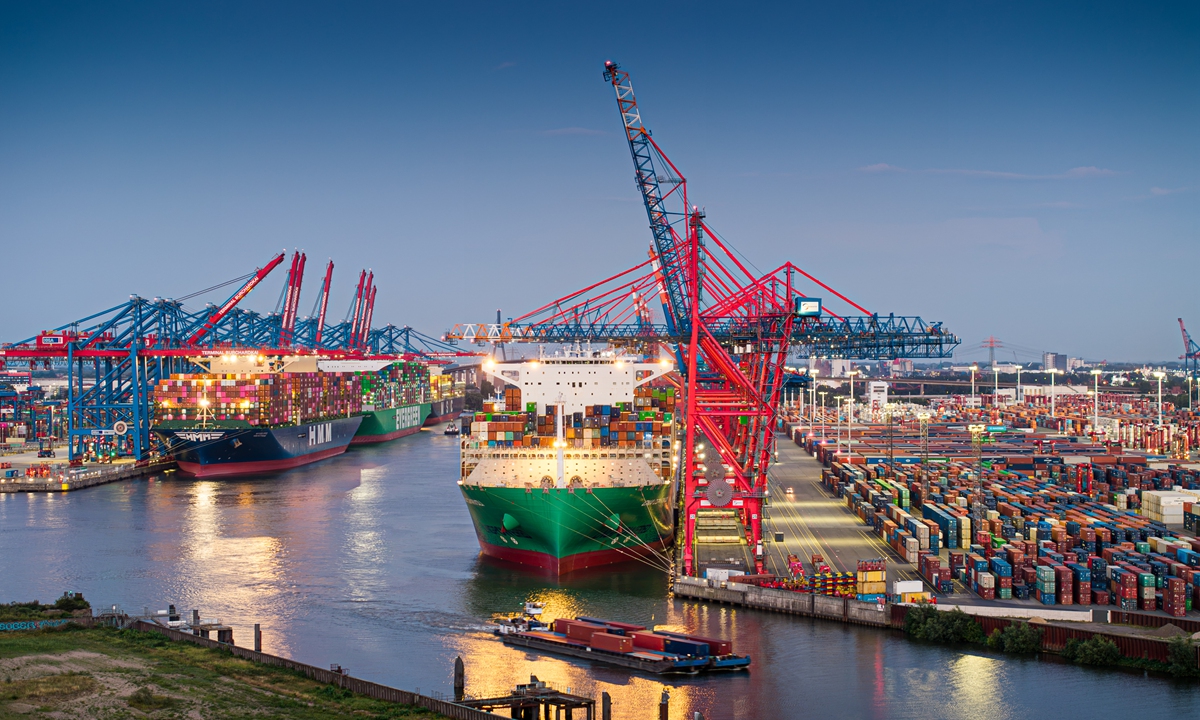
German exports to China fell year-on-year in the first half of 2026, pointing to a deeper restructuring of bilateral trade as China moves up the manufacturing value chain, Chinese analysts said. They also cautioned that the decline should not be read as diminishing China's importance to German businesses, given the deep economic ties and the continued benefits of cooperation for both sides.
Germany's first-half exports to China fell by more than 12 percent year-on-year to just under 37 billion euros ($43 billion), while imports from China rose 8.9 percent to 91.8 billion euros, according to data from Germany Trade & Invest (GTAI) cited by Reuters on Sunday. Germany's trade deficit with China widened to about 55 billion euros from 40 billion euros a year earlier, the report said.
Reuters cited Corinne Abele, GTAI's East Asia expert, as pointing to weaker domestic demand and the fact that German companies are increasingly producing inside China.
Commerzbank economist Vincent Stamer said that China's diminishing reliance on Germany showed that the country is becoming more independent of Western powers and catching up technologically, according to Reuters.
China has continued to strengthen its capabilities in sectors including new-energy vehicles, artificial intelligence and advanced manufacturing, enabling more products and technologies that previously depended on imports to be supplied domestically, Zhao Junjie, a senior research fellow at the Institute of European Studies at the Chinese Academy of Social Sciences, told the Global Times on Sunday.
"This means the structure of China-Germany trade is changing," Zhao said, noting that as Chinese industries move up the value chain, China's reliance on some German industrial products is declining, while Chinese companies are becoming more competitive in sectors where German manufacturers traditionally enjoyed strong advantages.
In a position paper released on July 28, China's Ministry of Commerce (MOFCOM) said that the rapid growth of China's modern industries is driven by innovation, with nationwide research and development (R&D) spending growing by an average of 10 percent annually during the 14th Five-Year Plan (2021-25) period.
The changing trade trend is also linked to Germany's own industrial competitiveness and policy environment, Zhao said, noting that high energy costs, demographic pressures and slower investment in some emerging technologies have weighed on the country's industrial upgrading and innovation.
At the same time, political and security considerations have increasingly shaped Germany's economic policy toward China, as Berlin has moved closer to the broader US and EU "de-risking" agenda, Zhao said.
"Such policies can be a double-edged sword, raising costs for German companies in China and disrupting bilateral economic cooperation while seeking to pressure Chinese industries."
However, it is notable that overall China-Germany trade remained substantial. Total bilateral trade exceeded 128 billion euros in the first half, about 3 billion euros more than Germany's trade with the US, according to Reuters.
China overtook the US as Germany's top trading partner in 2025 after US President Donald Trump launched sweeping protectionist tariffs that weighed on German exports to the US.
Falling German exports should not be seen as diminishing China's importance to German businesses, especially as bilateral ties are increasingly expanding beyond trade into investment, local production and R&D, analysts said.
German companies invested more than 7 billion euros in China in the first 11 months of 2025, up 55.5 percent from 4.5 billion euros in 2024 and 2023 and hitting a four-year high. German companies are bulking up their China business and adopting "China for China" production strategies partly to reduce exposure to possible tariffs and export restrictions, according to Reuters.
Major German companies are also deepening their presence in China. BASF's Verbund site in Zhanjiang, South China's Guangdong Province went fully operational in March with an investment of 8.7 billion euros, the largest single investment project wholly owned by a German enterprise in China, the Xinhua News Agency reported.
"China and Germany have developed deeply intertwined economic interests over many years," Zhao said. Rather than treating stronger Chinese industries as a reason to reduce cooperation, Germany should adapt to a relationship in which competition increasingly coexists with investment, innovation and industrial collaboration, he noted.
Recent high-level exchanges have also underscored the importance both sides attach to economic ties. During a meeting with German Economy Minister Katherina Reiche in May, Chinese Vice Premier He Lifeng said that China and Germany are important economic and trade partners with a solid foundation, enormous potential and strong complementarity, calling on both sides to consolidate cooperation in traditional sectors and tap opportunities in emerging fields, according to the Xinhua News Agency.
Reiche said that the German business community remained confident about China's economic prospects and innovation capabilities and would continue to deepen cooperation, Xinhua reported.
The two sides have also moved to strengthen institutional mechanisms. China and Germany agreed to restart the China-Germany Joint Economic Committee and establish two new working groups on trade and investment and industrial cooperation, according to the MOFCOM.
。 北京8月10日电 题:搭建对外开放平台 激活服务贸易动能——2026年中国国际服务贸易交易会看点前瞻 记者乌梦达、吉宁、张骁 全球服务、互惠共享。还有一个月的时间,2026年中国国际服务贸易交易会将在北京开幕。 立足“十五五”开局之年,作为中国高水平对外开放的国家级重要平台,本届服贸会锚定服务贸易重点领域集中展成果、谋合作。各个专题板块、上百场论坛洽谈活动,将呈现哪些务实看点?承载展会的物理空间又有什么新变化? 吸引全球关注更多 300多家国际龙头企业参展 记者了解到,本届服贸会主题展、专题展招展工作进入尾声。截至目前,英国、丹麦、巴西、澳大利亚、世界贸易中心协会、联合国粮农组织等近70个国家(地区)及国际组织确认设展参会,740余家企业及机构已有意向线下参展,其中包含300余家世界500强及行业龙头企业。

B | 这是8月10日拍摄的首钢园区。记者 谢晗 摄 挪威驻华大使馆参赞、挪威创新署中国区负责人汉宁说,作为本届的主宾国,挪威计划在首钢园设立约260平方米的挪威国家馆,汇集海洋产业、海洋与动物营养、农业、能源、健康、数字服务等多个领域成果。 本届服贸会首次组织“出海服务推介路演”系列活动,目前已征集近40场,还首次设立“出海服务企业展区”,汇集金融、法律、会计、广告、人力资源等领域的30余家出海服务企业,提供一站式出海服务。 一大批创新成果、重磅活动将集中登场。首都会展集团是服贸会的承办单位之一,北辰集团副总经理魏明乾代表首都会展集团表示,阿里巴巴、施耐德等企业和机构,计划发布180余项创新成果,覆盖人工智能、医疗健康、绿色低碳等多个领域。相关国家、国际组织、省区市及专题计划举办190余场论坛会议与洽谈推介活动,还将发布多项权威报告。 参展的各大机构和企业,瞄准的正是中国经济的广阔发展前景和强化合作的重要机遇。安永华北区主管合伙人张明益表示,服贸会持续搭建联通全球服务市场、推进高水平对外开放的平台。期待借助2026年服贸会,集中展示公司在可持续发展、跨境经贸领域创新实践,对接更多合作机会,共同挖掘服务贸易新机遇。 链接国际服务更优 多项服务举措惠及各主体 2026年上半年,中国服务进出口总额达37797.5亿元,同比增长8.3%,个人文化和娱乐服务等领域出口增速亮眼,成为拉动服贸增长的重要力量。立足服务业竞争优势,北京深化服贸会文商旅体融合发展,打造多元活动矩阵。 2025年9月12日,在2025服贸会泡泡玛特展位,参观者拍摄LABUBU玩偶。记者 陈晔华 摄 服贸会前,永定河集二期将全新亮相,让展客商和市民拥有“白天参展、晚上赏景”的沉浸式游玩体验。展会举办期间,服贸会还专门规划上线两条夜游精品游览线路,展商既可徜徉永定河山水风光,也可走进工业遗存园区,体验科幻项目、特色美食。 石景山区副区长胡浩说,属地将加码丰富文化产品供给,推出“落霞回笺”秋日主题活动,设置四大互动体验,同时推动“赛事+展会”深度联动,激活区域发展活力。 在配套服务保障方面,属地多方统筹资源,盘活30处停车场,供给上万个停车位,新开两条服贸会免费接驳专线。

C | 同时扩容优化周边住宿供给,全方位优化客商、游客的出行与住宿体验。 工业遗存焕新升级 会展小镇蝶变登场 走进服贸会首钢园会场,是一片热火朝天的忙碌场景,建设者加紧推进展馆设施完善。 自2021年服贸会专题展首次落地首钢园以来,展会配套建设持续迭代升级。2025年,服贸会实现“一会一址”集中在首钢园举办。

D | 2026年8月9日,首钢园服贸会永久会址改造项目全面完工交付,以“会展小镇”的形象全新亮相。

E | 俯瞰,会展小镇的会展群与滑雪大跳台、钢铁高炉等园区标志性景观交相辉映。 记者了解到,会展小镇借鉴国际潮流及理念,建设可办展、可洽谈、可文旅、可休闲的花园式国际会展聚落,致力于打造承载国家级对外开放盛会、促成跨国经贸合作的国际化交流平台。 首钢集团有限公司副总经理姜楠介绍,全新打造的会展小镇构建起成熟完善的空间与服务体系,依托中央轴线叠加广场街道,形成“一环六轴”的整体空间结构。本次改造总建筑面积14.46万平方米,空间格局上以原有工业肌理为基底,有机活化四高炉、一焦炉等工业遗存,同时依托永定河水系生态资源,全面打通景观视廊。 智慧化是会展小镇的一大特色。记者了解到,园区升级运营服务中心和AI尚首钢园小程序,搭建智慧会展管理平台,实现场馆信息、停车导航、餐饮服务、交通接驳等一键查询和园区客流车流全时段热力分析,为参展客商、游客提供一站式智慧服务。 一个月后,当服贸会的大幕开启,这座永久落地的会展小镇,将再次以开放之名,迎接四海宾朋,共赴一场联通世界的服务贸易盛会。
Current article:http://4g1.zanjionglangzhaizhizaxiying.buzz/list_thpn/ql0m.html
Published on:13:36:55
- 8341359‘전자발찌’ 차고 음주 측정 3차례 거부한 70대…실형 선고받고 재수감
- 301907《红色沙漠:增强版》官宣!新增故事线 本体免费升级
- 5236国台办:将通过国共平台邀更多团组赴陆交流
- 432Ram Charan Undergoes Surgery Under His Eyelid
- 522推动高质量发展行稳致远
- 5872480开局起步“十五五”:海南渔业第一大县向现代海洋经济发展新高地迈进,开局起步“十五五”:海南渔业第一大县向现代海洋经济发展新高地迈进
- 81789非官方数据:7月份非有地私宅转售价按月上涨1%
- 7982926中学女生揪男生头发、扇脸?贵州沿河县官舟镇官方:情况属实
- 4096719Jammu News: खराब मौसम के कारण जूनियर इंजीनियर सिविल की परीक्षा स्थगित, 31 अगस्त को होना था एग्जाम
- 67870272026年之后,SEO从业者该往哪走?
- 12851超市称重零食暗藏套路,遇到缺斤短两该怎么维权
- 6676831嘉友国际:公司高级管理人员刘翔宇离任
- 64109财政部:7月份全国共销售彩票875.71亿元
- 64198北京多区发布紧急寻人通知!涉民航总医院,具体时段、楼层
- 288680百万级的中国品牌汽车,能卖得出去吗?
- 58701Colombia earthquake kills at least 111
- 115撑起全球AI半边天?一文了解姚期智与他的清华姚班
- 6445只差27场!只差29断!只差76助!詹姆斯将连破3大神迹,真要被做到了
- 652抚顺市举行庆祝中华人民共和国成立75周年升国旗仪式
- 16325今年Boxing Day新西兰人花了多少钱?比去年少了…
- 381331库里神仙漂移三分众生相 小桂子瘫倒 老板起立 老板娘比心
- 4611156Shabana Azmi Joins The Cast of Awarapan 2
我的网站热门国内
- Copyright @ 2016-2017 我的网站 版权所有